3min read
credit: @catsanddogsworld
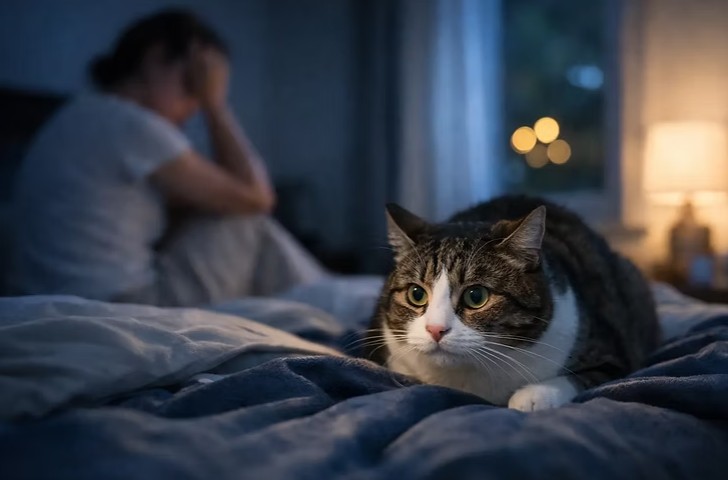
For indoor cats, nighttime can magnify stress. The world gets quieter, your attention disappears, and any boredom, frustration, social tension, or discomfort that stayed hidden during the day suddenly becomes obvious. The good news is that nighttime anxiety is often very workable when you stop treating it like random bad behavior and start looking at it as a pattern with triggers.
Not every active cat is anxious. Many cats naturally become more alert in the evening, and some midnight zoomies are normal. Anxiety usually has a different feel. It tends to look repetitive, unsettled, or intense rather than playful.
You might see pacing, vocalizing, clinginess, hiding and reappearing, overgrooming, staring at doors or windows, sudden aggression, litter box accidents, or repeated attempts to wake you up. Some cats seem needy and frantic. Others withdraw but stay visibly tense. In multi-cat homes, nighttime anxiety can also show up as stalking, blocking hallways, or silent social pressure that only becomes noticeable once the house settles.
That difference matters. If your cat is just energetic, the fix is usually better play timing and stimulation. If your cat is anxious, you need a more structured plan that reduces stress across the full day, not just at bedtime.
Nighttime anxiety rarely comes from one cause. More often, it is the result of several small stressors stacking up.
“Boredom for a cat isn’t an idle state; it’s a stress signal. When instincts like chasing, scratching, and surveying territory are suppressed, the body and mind dull. Over time, this leads to weight gain, lethargy, and subtle anxiety behaviors such as over-grooming or nighttime pacing.” p.4, Thrive & Purr: The Modern Indoor Cat Wellness Guide
Indoor cats are built for short hunting cycles – stalk, chase, catch, eat, groom, sleep. When that sequence never happens in a satisfying way, energy can collect until bedtime. A cat who naps most of the day while you work may be physically underchallenged and mentally underfed.
This is why random toys scattered on the floor often do not solve the problem. Many anxious cats do not need more stuff. They need a predictable outlet that lets them complete natural behavior patterns.
Cats are highly pattern-based. If dinner, play, attention, and lights-out change every night, some cats struggle to settle. This is especially common in busy households where weekdays and weekends look completely different.
A cat does not need a rigid military schedule, but they do benefit from rhythm. Predictability lowers vigilance. When your cat knows what happens next, they have less reason to stay alert and reactive.
Some cats become distressed when their favorite person disappears behind a closed bedroom door. This can look like crying, scratching, or repeated attempts to reunite. It is easy to label this as attention-seeking, but in some cats it is genuine stress around social access and routine disruption.
The trade-off is that responding every time can accidentally reinforce the behavior. Ignoring it without changing the cat’s daytime emotional security can also make it worse. You usually need a middle-ground plan that builds independence while preserving connection.
Night changes a cat’s sensory world. Outdoor noises become more obvious. Reflections in windows can look like intruders. HVAC systems kick on. Porch animals pass by. A nervous cat may spend hours monitoring these changes.
This is especially relevant if your cat camps at windows, startles easily, or seems hyperaware of sounds. In those cases, the bedroom door is not always the true problem. The cat may be reacting to the environment itself.
Pain, hyperthyroidism, cognitive changes, urinary discomfort, high blood pressure, and gastrointestinal upset can all show up as restlessness or nighttime vocalization. Senior cats deserve extra caution here. So do cats with sudden behavior changes.
If the behavior is new, escalating, or paired with appetite changes, litter box changes, weight loss, or disorientation, a veterinary check should come first. Behavioral support works best when discomfort is ruled out.
The most effective approach is not a one-time trick. It is a structured evening routine supported by calmer daytime habits.
Cats settle better when the hours before bed follow a pattern. Think in terms of a short, repeatable cycle: interactive play, a food reward or meal, a calm transition, then sleep.
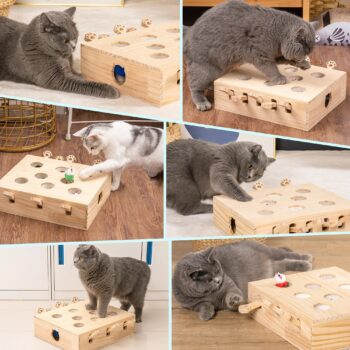
Interactive play should mimic hunting, not just wave a toy around. Let your cat stalk, chase, pounce, and catch. A focused 5 to 10 minutes can work far better than leaving independent toys out all day. Then offer a small meal or snack. This helps complete the hunt-eat-rest rhythm that many indoor cats are missing.
“Even a few minutes of structured play can reduce stress behaviors and strengthen your bond. Set a timer for 10 minutes twice a day. Use a wand toy or food puzzle to encourage active hunting skills. End each session with praise or a small treat — this routine helps release energy and builds confidence.”
After that, lower stimulation. Dim lights, reduce household chaos, and avoid revving your cat up right before you want them to sleep. Consistency matters more than perfection.
“Did You Know? Cats respond positively to repeated time cues—using play at consistent hours reduces unwanted nighttime energy bursts.” p.6, Thrive & Purr: The Modern Indoor Cat Daily Planner & Activity Tracker
If your cat spends ten hours under-stimulated, a single play session at night may not be enough. This is where short, structured enrichment blocks are powerful. A few minutes of movement, food work, novelty, climbing, or scent exploration spread through the day can reduce the pressure that explodes at midnight.
This is also why data-driven tracking helps. When owners start noticing patterns – worse nights after skipped play, better nights after food puzzles, more tension on work-from-home days – the behavior stops feeling random. It becomes manageable.
An anxious cat needs places to perch, hide, and observe without feeling exposed. Vertical space is especially helpful in small homes and multi-cat households. If your cat is uneasy at night, look at whether they have a secure resting area away from traffic, noise, and other pets.
For some cats, access to a cozy bed near you helps. For others, sleeping better means having distance and control. It depends on the cat’s social style. Clingy behavior does not always mean the cat wants constant contact. Sometimes it means they want reassurance plus the option to retreat.
Close blinds if outdoor movement causes vigilance. Add white noise if small sounds set your cat off. If your cat fixates on a hallway or doorway, consider whether another pet, stray animal, or recurring sound is turning that area into a stress point.
If your cat cries outside your bedroom, decide on your sleep boundary and keep it consistent. Changing the rule night to night usually prolongs the problem. If the cat will sleep in your room calmly, that may be a practical solution. If not, create a comfortable sleep zone outside the room with bedding, water, litter access, and a pre-bed routine that makes that area feel safe and rewarding.
If your cat wakes you and immediately gets food, play, or intense attention, you may accidentally train the pattern. That does not mean you should punish or scare them. Punishment increases stress and can make nighttime behavior more chaotic.
Instead, shift rewards earlier. Meet your cat’s needs before bed in a predictable way, then keep overnight responses neutral and minimal unless you suspect illness. The goal is to make calm behavior pay off more than frantic behavior.
This is where owners often miss the real issue. Nighttime conflict is not always loud. One cat may block access to the litter box, stare another cat down from a doorway, or patrol sleeping areas. The more anxious cat may then vocalize, hide, or become restless all night.
If you have multiple cats, check whether there are enough litter boxes, resting zones, vertical spaces, feeding areas, and escape routes. Resource competition creates anxiety fast, especially in smaller homes. A cat who seems needy at night may actually be socially stressed all day.
Pheromone diffusers, calming treats, and soothing beds can be useful supports. For some cats, they take the edge off. But they work best as part of a full behavior plan, not as a substitute for one.
If your cat has no routine, poor enrichment, unresolved conflict, or a medical issue, products alone will probably disappoint you. That does not mean they are useless. It means they are not the foundation.
Get veterinary guidance if the anxiety starts suddenly, your cat is older, the vocalizing sounds distressed, or there are changes in litter box habits, appetite, weight, grooming, or mobility. If medical causes are ruled out but the behavior is intense or persistent, a feline behavior professional can help you map triggers and create a structured plan.
That kind of structure is what busy cat owners usually need most. Not more random tips. Not another toy your cat ignores. A clear routine, measurable progress, and expert-vetted steps that fit real life. That is exactly why behavior systems like Thrive & Purr resonate – they turn scattered advice into something you can actually follow.
If your nights feel tense right now, do not read your cat’s behavior as spite or stubbornness. Read it as information. A calmer night usually starts with a better pattern, and small changes repeated consistently can shift the whole household.
👉 Explore Thrive & Purr: The Modern Indoor Cat Wellness System









Leave a comment